Tuesday, January 31, 2012

The Path Through the Woods

When I was seven, my father cut a path through the woods for me to take to the place where the school bus would pick me up. The south grows thickets as well as the Amazon, but he had a scythe and he whacked through the jungle to the road where I would wait for the bus. He asked me if I knew what to do. I did not, but I told him I did. I had never been on a school bus. It was terrifying at first. After a while it was kind of fun. After a while longer it was boring.
That was the beginning of my life as I think of it, of my independence from my parents, of me learning to be me. I was on my own. I never stopped to wonder why the path didn’t grow wild again. My father must have kept it cut for me, but he never told me he did. He and my mother saved money to send me to college, but they never told me they did that either. That was another path they cut for me, one I thought I travelled on my own when in fact they might as well have been right there with me, holding my hand the way my mother had when I caught that first school bus.

My life is an accident of birth. I’d like to say I owe my success to my hard work and ambition, but I believe I owe it more to those paths my parents made for me. So what does that mean for those of us born to plenty? What obligation does that accident of birth impose upon us? Or does it create any obligation at all?

Over the long sweep of history, some prosper, but most do not. And those who prosper have the aid of not only their fortunate circumstances but also of the labors of their less privileged neighbors, the laborers who till the fields and man the assembly lines, the workers who create wealth but do not share in it themselves.

Luck does not compel generosity, but neither does it warrant smugness. At the moment of birth, none of us has done anything to set ourselves apart from children born in the slums. And yet we learn to accept that our privilege derives from our character rather than our good luck. When we give a beggar food at the back door or drop a few coins in the Salvation Army kettle, we feel we are acting from the goodness of our hearts, perhaps even from a sense of noblesse oblige.

But what if we thought we must return the favor that the fates have given us? What if we felt we should be path clearers ourselves, and not just for our children, but for the children of others. What if we truly believed that “there but for fortune (or the grace of god, if you wish) go I”? Would it make us feel lucky? Certainly. Would it make us feel obligated? I'm not so sure.

I don’t suspect many of us feel that being lucky at the craps tables in Las Vegas carries with it an obligation to use some of the money to help others. Maybe that’s all there is to it. If we are lucky, we feel lucky, not indebted. So if we hit the jackpot, we may put a little extra in the charity envelope and feel happy with ourselves for our unbidden generosity. Maybe nature has set it up that way for us. If you get lucky and come upon a fresh kill, drag it off and hide it for yourself and your children: that is the way to survive.

If that’s the case, be glad if you were born lucky. And try to not think too much about those who weren’t. It will just make you feel bad. This is the paradox of our humanity. To earn our place as moral individuals, we often must do things that our atavistic brains resist. We have to see through the rationalizations for our selfishness that our pre-frontal cortex has laid in to justify the primitive programming of our base brain.

Friday, January 27, 2012

A New Morning in America

Remember when Ronald Reagan parted the clouds of Jimmy Carter’s national malaise and told us it was morning in America? Reagan was something of a snake-oil salesman (Dr. Laffer’s supply side elixir), but he tapped into the national psyche of self-reliance. He made us believe we could strike gold again. He made us feel hopeful. If you can’t have what you need, hope is the next best thing.

After four years of the worst recession since the Great Depression, many of us today aren’t feeling so hopeful. It’s hard to be optimistic about the future when you can’t see the path forward. Politically, we’re dug in. Half of us want the government to get the hell out of the way, and the other half want it to step up and do its job of helping those who can’t help themselves.

Tough times make us fearful, and no one is at his best when he is afraid; anyone who looks like he might be in the way of survival is the enemy. But economic and social policy are not war. They are not zero-sum games. Someone doesn’t have to lose for another to win. Hunkering down in the trenches of our own self-interest is not going to help us. If we are ever to accomplish anything more than waging better war, we need to find a narrative other than “us or them.” We are all us. There is no them.

This country was founded on rugged individualism. We are all libertarians at heart. But we all need help sometimes. Family helps us. Friends sometimes. The government frequently. We ride on roads of government help, use the electric power of government help, peacefully go about our business under the protective care of police, firefighters and our military. If we lose our jobs, we collect unemployment assistance until we get back on our feet. If we need medical care, no emergency room will turn us away. We all rely on the infrastructure of a civilized society.

The tricky part is how to pay for that infrastructure and how to get the help where it is needed in the most efficient and humane way. In a large, diverse society, there are no practical alternatives to taxes as the method of payment and government as the means of assistance. The only real questions are who should pay how much in taxes, and who should receive how much in aid. The answer to the first question is self-evident: those who can best afford to pay are the ones who should. The answer to the second is equally unambiguous: those who need help are the ones who should receive it.

Not so fast, you say. Why should everyone get help? What if they’re malingering? Why should I support someone who is too lazy to work? It’s a fair question. To even the most charitable, it doesn’t seem right for some folks to sit back and do nothing while others work hard to support them. We spend a lot of time in the bureaucracy trying to sort that out who is trying to find work and who is free-loading, and we don’t do a very good job. What if we could conclude that that kind of inquiry is neither necessary nor desirable? What if we could convince ourselves we would all be better off if we let no one go hungry, even the lazy, that we should feed our neighbor not because it is the moral thing to do, but because it is in our own economic self-interest to do so.

In a recent New York Times an op-ed piece titled “The True Cost of High School Dropouts,” Henry Levin and Cecelia Rouse pointed out that for every dollar spent to keep kids from dropping out of high school, the gain to society is $1.45 to $3.55, depending on the educational intervention strategy (earlier preschool, smaller class sizes through high school, higher teacher salaries). “Studies show that the typical high school graduate will obtain higher employment and earnings — an astonishing 50 percent to 100 percent increase in lifetime income — and will be less likely to draw on public money for health care and welfare and less likely to be involved in the criminal justice system.”

I cite this one example because the facts are handy and compelling. There are similar examples across the width and breadth of the social safety net. Better wellness care leads to fewer long-term health issues; better health insurance leads to fewer costly emergency room visits; better prenatal care leads to healthier infants; better childhood nutrition leads to better students and healthier adults. And so on, and so on.
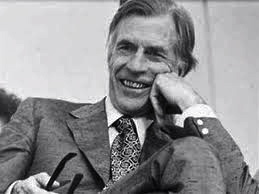
John Kenneth Galbraith

Over a half-century ago, the respected economist John Kenneth Galbraith made the case for guaranteeing to all at least the minimum income needed to live. He acknowledged that some would choose to live off the dole rather than work, but he believed that most would not want to accept a subsistence lifestyle and would strive for more. He made the argument not on moral grounds, but on the same kind of practical grounds that Levin and Rouse use to make the case for spending more to reduce dropouts: over the long term, society gets back more than it spends to help people have enough to eat, stay healthy and gain an education.

We all understand that if we neglect to maintain our homes or our cars, we will pay more to repair them in the long run. The same is true for our collective selves. Sooner or later we will bear the costs of neglect of our neighbors. There is no way to opt out of those costs. If we are wise, we will do the maintenance now that will keep the costs reasonable over the long term. If we are wise, we will pay a little more now so we can pay far less later.

The trouble is, now is now and later always seems like much later. It’s a normal human response. It’s the way every child thinks. For a five-year old, immediate gratification trumps deferred gains. We’re not children though, and we don’t need anyone to show us the way. Each of us has the power within us to plan for a better future.

Take a look at the candidates in the next election. Ask yourself who among them will look to those who can afford to pay taxes to do so. Ask yourself who among them will invest in our human capital by offering adequate nutrition, health care and education to even the least fortunate among us. These are the women and men who will usher in a new morning in America.

Monday, January 16, 2012

Thursday's Child

Here in Palo Alto we have a school program called Tinsley, under which about five hundred kids from East Palo Alto, which is a mile away and is predominantly Hispanic, are brought into Palo Alto schools, which are mostly white and Asian. This isn’t something our community did voluntarily; it was forced on us twenty-five years ago by a Brown v. Board type lawsuit. So, while many applaud the program, others resent it, believing it diverts resources from Palo Alto kids and doesn’t do the kids from East Palo Alto much good.
A Stanford graduate student studying that last point—how much the East Palo Alto students are benefited---recently reported significant gains in science and history and small gains in math and English. She also noted important up-ticks in student self-confidence. Tinsley kids “felt comfortable talking to anybody, of any social class. They felt they could operate in a broader social world even if that process is sometimes hard.”

When the Stanford study was reported by a local online news site, an intense community discussion followed. Passions, it seems, have not cooled.

“Busing,” as Tinsley type solutions used to be called, is a difficult and divisive issue. There are good arguments on both sides, but these facts remain:

1.     The nation’s schools have re-segregated to pre Brown v. Board levels.
2.     The education opportunity in schools with predominantly minority populations is generally inferior to those in white schools.
3.     Income inequality is growing. It is now much greater than during the Civil Rights movement, greater than any time since the 1920s.
4.     Income inequality makes upward mobility harder.

Palo Alto is not all rich folks, but we are very well off. Many here made their places by their own hard work and enterprise. That personal success, and the struggle for it, can make us think that if we can do it anyone should be able to. Economists tell us this is not true. Being born poor is a substantial impediment to upward mobility.

Maybe that’s just the way it is. Maybe those of us who are lucky (or have made our own luck) owe nothing to those who are not. I don’t think that is the way we feel toward one another, however. Times are a little tougher now, so perhaps we are a bit hunkered down, looking primarily after ourselves, and that is understandable. Our future, though, as a country, depends upon our children. Not just the ones born to us, or adopted by us, but those all around us. We cannot prosper if we do not educate them and give them real (not imagined) opportunity to become important parts of the economic fabric of our society.

Even if you doubt Tinsley works as well as the Stanford researcher reports, it’s hard to see how, in a community as rich as ours, with the resources to make significant private contributions to our public schools, our children are suffering because of support for the Tinsley program.

And then there are these questions: If not here, where? If not us, who? I don’t see how we can just turn away from the reality that poor kids need help.

Martin Luther King dreamed of a day when his children “will not be judged by the color of their skin but by the content of their character.” It is a fair thing to wish for, and a test we should all hope to pass.

Wednesday, January 4, 2012

On the Warm Updraft

Salmon struggle upstream to spawn and die. The male praying mantis loses his head for sex. Little grey spiders, like Charlotte from Charlotte’s Web, spin their egg sacs, their magnum opuses, as Charlotte called them, with their last strength. Throughout nature, giving life to the next generation is, it seems, worth dying for.
I can’t decide whether I am Charlotte or Wilbur. Wilbur, I think, in those moments when he watched frantically as Charlotte’s children blew away on gossamer balloons in the warm spring breeze. Not quite Wilbur with his new friends, Charlotte’s daughters who stayed in the barn, who greeted him with “salutations,” just as their mother had. That’s the wonderful thing about children’s stories. At the end, the story begins anew.

For millennia humans lived no longer than the time it took to have children and raise them to an age at which they could survive on their own. Lately, we have been living longer, long past the time our kids go off on their own. Long past the time that, evolutionarily speaking, we are necessary.

I don’t know whether I’m thinking too much or feeling too much. Writers are in the business of reflection. It’s entertaining, but troubling too. The more I think about how the world works, how we live together, the harder it gets to understand. Or, maybe that’s not right. I think I understand it well enough, but I am discouraged by what seems to be our inability to live beyond our most basic instincts. On bad days, I think we are little more than big ant colonies, busy about the business of survival, some luckier than others, depending on one another in the same thoughtless way plants depend on sun and water.

So, that’s depressing, right? I mean we did have the Renaissance. I don’t think ants have had that yet. For all our high-mindedness, though, we are selfish. Except when it comes to our children. Like so many others in the animal kingdom, for our children we would without hesitation give up our lives.

So powerful is the protective instinct of a parent that it is nearly impossible to turn off. The problem is that after our children are out of the nest, the best way to help them is to back off. So here I am, watching the world turn, a world I have realized I cannot change, and watching my children from afar too, loving them from afar, if from such a distance what I feel can be called love, since for me love lives in the things I do for those I care for.

The years after your children are grown are unnatural years, years without a mortal purpose. Loving someone so much you would die for them is a little like actually dying. Everything else seems trivial. I imagine that’s the way soldiers returning from combat feel. In harm’s way they would have died for their buddies, but now they wander a tranquil landscape that is as deadly to their souls as the war zone was to their bodies.

You can’t always help how you feel. The rush of lust and sex. The spike of fear for a child in danger, the excruciating relief when the danger passes. The numbness of isolation. E.B. White gave us a happy ending, but then Charlotte didn’t have to sit home alone wondering whether her children had blown into a pond. I suppose he meant to give us more too: an illumination of the dreadful beauty of passages; a tender touch to brush aside the tears of loneliness; a warm updraft with a promise of new beginnings.

Friday, December 16, 2011

An iPod for the Economy

My son Grant, an otherwise brilliant man, is a Mitt Romney fan. Grant was an enthusiastic Obama supporter in 2008. His opinion of Obama today can be summarized as: “Sounds great, less filling.”

To give Grant his due, Romney has many good things in his background. His former business, private equity investing, isn’t entirely about stripping assets and cutting jobs. If you want to be successful, as Romney was, you have to invest for future growth. As governor, Romney brought universal health care to Massachusetts and was pro-choice.

But the Republican faithful don’t tolerate political heresy, and neither universal health care nor a woman’s right to choose is in their catechism. So Candidate Romney has slipped on vestments of conservative purity to cover Governor Romney’s tie-dyed-secular-socialist garb. My worry is that he (whoever that is) is beginning to think the coats of many colors look good on him.
(photo from themaskofgod.blogspot.com)
On the Democratic side, we are suffering from the kind of disappointment one feels when the preacher is possessed by the Devil. Obama promised he would usher in a new era of post-partisan progressivism, but, instead, Mitch McConnell and John Boehner ate his (and our) lunch.

Which brings me to Steve Jobs. As everyone on the planet knows by now, Jobs famously (and arrogantly) said it wasn’t the customers’ job to know what they wanted, it was his job to give it to them. Is it possible that we need more of that kind of thinking, that willingness to be judged entirely by results rather than popularity, in our political leaders? Someone to design an iPod for the economy; an iPhone for entitlement reform; an iPad for tax reform.

I’m not saying we’re children, that we can’t know what we want. What I am saying, though, is that we understand the outcomes we want better than the ways to get there. I love my iPad. I have no idea how it works.

I don’t believe in mysticism. I’m not looking for a cult leader. But I believe there are men and women among us who have staggeringly good ideas. They are not panderers, though, so they don’t run for office. We are the reason they don’t run. They don’t want to have to fight with us to get us to try something new; or risk not getting re-elected if they don’t do what we want them to. But if we were willing to listen to what they have to say, instead of telling them what we want to hear, perhaps we could discover new ways forward.

Most of today’s politicians seem more like hucksters than statesmen. I thought Obama was different (and maybe he is), but we are an impatient lot, and he has not parted the waters. The Republicans have made him look like a naif, and many, like my son Grant, are losing faith in him.

How did Steve Jobs pull it off? How did he make us listen? His designs were compelling, for one thing. You can say that there was less pressure on him to perform because lives don’t depend on mp3 players, but his did. And his products weren’t all about instant gratification. iTunes, one of his greatest legacies, took years to build.

We aren’t going to regain the promise of America if we don’t do the hard and patient work of laying the foundation for the future. If we flock to every quick-buck politician who tells us what we want to hear, we’re going to be left with little more than a lifetime supply of snake oil.

I don’t know all the things we must do to make a safe and prosperous future for our children and our grandchildren, but then I loved music for a lifetime without ever imagining a day when I could carry all my songs in my pocket.

Sunday, October 23, 2011

The Road to Understanding

This is a story about how I learn from my children. I have many opinions, some firmly held, that, when I think about them, I’m not sure why I have them. This is particularly so with economics, everything from fiscal and monetary policy to the responsibility of the state to its citizens. My sons Chris and Nick and Grant and I talk about economics all the time, and now that Chris is a senior at the University of Chicago, studying math and economics in the halls of Milton Friedman, he has been giving me books to read, most recently Friedrich Hayek’s The Road to Serfdom.

This is also a story of how I learned from my father. In his thrall, I grew up a social Darwinist. This is not to say he was not compassionate. He helped the poor face to face, and I learned from him that that was our responsibility. He wasn’t so big on paying taxes so the government could help those he could not, however. I never made any money to speak of in those years, so I didn’t really have an opinion about taxes. I thought we ought to help the poor, or at least give them a fair chance to help themselves, but I didn’t have a very good notion of how to do either. Truthfully, growing up in a white-bread southern suburb, I had no idea what it meant to be poor.
Hayek would have appealed to Dad. Hayek was a fierce libertarian, who feared collectivism because he believed it inevitably led to totalitarianism, an understandable concern in the middle of the fight against Hitler and Mussolini, when The Road to Serfdom was written. John Maynard Keynes is widely regarded as Hayek’s rival in economic theory, and certainly Keynes was more favorably disposed to government intervention in recessions, but even though Hayek vigorously opposed state control of the economy, he did not think the state should abandon its citizens in bad times.

He wrote: “There is no reason why in a society which has reached the general wealth which ours has attained the first kind of security should not be guaranteed to all without endangering general freedom.” (The Road to Serfdom, chapter 9.) The “first kind of security” to which he refers is “the certainty of a given minimum of sustenance for all.” This is a long way from survival of the fittest.

In today’s New York Times, Nancy Koehn reviews a new book titled Keynes Hayek: The Clash That Defined Modern Economics. She points out that Keynes’s support of government spending was developed in desperate response to Britain’s chronic unemployment in the 1920s and 30s. For his part, Hayek learned to fear government spending because of his dread of inflation, which he had watched devastate his native Vienna in the 1920s. Where you stand depends on where you sit, as they say. But Keynes also feared socialism, and Hayek did not think the state should abandon its citizens to the depredations that flow from fluctuations in economic cycles: “[T]he very necessary efforts to secure  protection against these fluctuations do not lead to the kind of planning which constitutes such a threat to our freedom.”

Christopher Sims and Thomas Sargent were just awarded the Nobel Prize in economics for their work in trying to understand how the economy responds to various kinds of government action. This was work done in the 1970s. They still don’t know the answers. The reason: it’s complicated; individuals and markets don’t always perform predictably. There are just too many variables. “If I had a simple answer, I would have been spreading it around the world,” Sims said.

So, what have I learned? I guess the answer is that I have a better understanding of what the questions are, but not much better idea of the answers. I am confused and ambivalent. I know what I would like--greater economic opportunity for the poor and the middle class (the rich seem to be doing fine, thank you) and a social safety net that catches us if we fall too far--but I’m not sure how best to get there. Long term, the answers seem obvious: educate our children better so they can compete in the global economy; repair our infrastructure; and innovate. Short term, all I can hear is the shouting at Tea Party rallies and Occupy Wall Street.

I doubt that many in the Tea Party have waded through Hayek. They might find him too moderate. From that side of the political spectrum today, there is a lot of magical thinking going on: if we just got government out of the way, we’d all be fine. Yes, if you have your own private police force and don’t need to use the roads much. Otherwise, good luck.

And from the school of thought I now feel closer to--the Nancy Pelosi fringe, as some call it--there are also problems. A good heart does not pay off the national debt. A good heart does not eliminate government bloat and corruption. It is almost as big a fallacy to think we can just raise taxes and everything will be fine as it is to want to drown government in the bathtub.

So, when will we listen to one another; when will we sit down and reason together? If you believe John Kenneth Galbraith or Daniel Kahneman, not soon. In The Affluent Society (another book Chris gave me), Galbraith coined the term “Conventional Wisdom.” He said we all have too much invested in what we think at any given time to let pesky facts get in the way. Only when events overcome us (think boarding the rocket ship to leave an over-warmed planet), do we let go of our cherished preconceptions.

Or, as Kahneman put it in “The Surety of Fools,” in this morning’s New York Times Magazine: “The confidence we experience as we make a judgment is not a reasoned evaluation of the probability that it is right. Confidence is a feeling, one determined mostly by the coherence of the story and the ease with which it comes to mind, even when the evidence for the story is sparse and unreliable…Overconfidence arises because people are often blind to their own blindness.”

That’s my story, and I’m sticking with it.

Wednesday, October 19, 2011

At the Corner of Self-Reliant and Selfish

They are bums, and that is why they are homeless.

These are people who have figured out that it's easier to beg than it is to work.

I think the homeless advocates are more interested in keeping the homeless problem going (rather than solving it) because to eliminate homelessness would eliminate their jobs. Governments and nonprofits want to increase the number of people who are dependent on handouts.

Like most people, I worked hard for and earned everything I have in life. I resent having to publicly support those who chose to hinder their existence by making bad life choices. Providing more assistance just gives people an easy way out and takes away their drive, pride, and work ethic.

Everybody has a story. So what? Why should Palo Alto have to take care of all the sad sacks?


Here in Palo Alto we have a place called the Opportunity Center. It was built five years ago to provide shelter and counseling for the homeless. Some feared it would be a magnet for homeless people from all over, but in the time since it opened the number of homeless in Palo Alto has fallen from 341 to 151. The center has given many a chance for a new life. One man has gone from the streets to studying biochemistry at a community college. He wants to be a doctor.

A recent story about the center by Sue Dremann in Palo Alto Online was followed by readers’ comments. Most were supportive. The ones quoted above were not. They are not unusual. You hear them anywhere homelessness or welfare is discussed. They call for hard work and self-reliance. You can almost hear John Philip Sousa playing or see John Wayne squinting into the brightness of the big sky.
Self-reliance is a myth, of course. Elizabeth Warren put it well recently when she said no one in this country does anything without help. We all rely on roads and public safety and free public education, provided by the government and paid for by taxes. When we pay our own taxes, we are just returning the gift given to us by those who came before.

We’d all like to think we can take care of ourselves. Dependence on anyone, family or social services, is no fun. Ultimately it is humiliating. We lose confidence that we are worth anything to anyone, even ourselves. We get depressed. We drink. We do drugs. We do stupid, self-destructive things. Is that a choice we make, or do we just walk out of the unemployment line and keep putting one foot in front of the other until at last we are completely lost?

I don’t think even the least charitable among us cares if someone else privately helps a person in need. Many don’t want to be told they have to help, though. They don’t want their tax money spent on people they suspect are just milking the system. They might be paragons of personal charity. They might volunteer in soup lines. They might be the first to stop and help a stranger change a flat tire. But they want to see the need with their own eyes, and they want to choose for themselves whom to help.

None of us wants to be told what to do by a government we’re pretty sure is bloated and inefficient, maybe even corrupt. This is the vein, black as coal, the Tea Party mines. This feeling that our government has lost touch with us, that it is working for someone else, and using our money to do it.

But the solution can’t be found on some Western movie set where everybody is ruggedly independent and fends for himself. In today’s complex and crowded world, we are all bound together by not only our common aspirations, but by our common needs for security, education and livelihood. The answer is not to tear down the creaky old house that shelters us, but to remodel it.

The Opportunity Center is a good example of just such a remodeling project. It was funded by a combination of government and private grants. It has both paid and volunteer staff. Law students from Stanford volunteer their time to help people navigate government and private programs for housing and employment. The Palo Alto Medical Foundation provides free medical and psychiatric care. A year or so after the Opportunity Center opened, my son Christopher wrote an article for his high-school newspaper about a new city police department plan to focus more on helping the homeless than arresting then.

So, if the Opportunity Center is a model of compassionate and effective joint governmental and private action, how does one explain the negative comments above? Hard to say. Perhaps those people are bigoted toward the poor. Perhaps they are afraid they could end up like that themselves. Perhaps they are just selfish.

I don’t think they speak for most of us, though. Almost everyone now is frustrated with government. That frustration and the related sense of powerlessness can lend appeal to simplistic fixes like Grover Norquist’s stated objective of shrinking the federal government down to the size that can be drowned in the bathtub. That makes a clever sound-bite, but it is ridiculously impractical.

Private enterprise will not meet all our basic needs. There just isn’t enough profit in fire, police, roads, education, the electric grid, clean water or social safety nets. If we want to take care of ourselves, we’re going to have to do that most American of all things: roll up our sleeves and get about the business of repairing government at all levels, so that it not only meets our needs but can be trusted with our money.

Monday, October 17, 2011

Hold Mail

I like the mail. I have the same sentimental affection for it that I have for the pocket watch my grandfather carried. I remember waiting for the mail carrier to deliver my self-addressed stamped envelopes, the ones writers used to send to agents so they could mail us rejection forms without having to pay postage. I used to call the mail truck “the shadow,” because the fear of rejection is almost as great as the fear of death. We all use email now. It’s quick and painless enough to pass muster as not constituting cruel and unusual punishment.

Still, the mail comes every day. Even though there is not much important in it nowadays, you can’t let it pile up in your mailbox when you’re out of town, so every time we go away I log onto usps.com and submit a hold mail request. I have a user name and password, just like on every other website. The post office website never remembers me, though. I have to fill in my full name and address every time. The site is slow and cumbersome, and several times I have come home to a box stuffed with random mail, like Tuesday’s and Saturday’s. I’ve taken to printing the confirmation of my mail hold and taping it inside the mailbox door so it pops up to scare away mail.

On a recent trip, Meg and I decided to play hooky a little longer, so I went online to extend my mail hold. Oops. No can do without the confirmation number, the one taped to the mailbox like a string of garlic.

Desperate to avoid post office Muzak and endless transfers deeper into the bowels of bureaucracy, I emailed the usps.com customer service department and begged for help. After a few days (standard time for mail delivery, apparently, even the electronic kind) a nice woman named Linda responded. She addressed me as “Page,” the name of my mother, whose bills I used to pay from my home; Mom has been dead for three years now, so having the post office call out to her was a little weird.

My half-dozen emails with Linda went like this: Linda: Here’s how you do it. Me: Tried that, didn’t work. Linda: The confirmation number should be right there, upper left corner. Me: Nope. Linda: If you placed the hold by calling the post office, you can’t extend online. Me: No, I placed the hold online (thinking, I just told you that). Linda: If your request has expired, you can’t extend online. Me: The request has not expired; can’t you just send me the number? Linda: Sorry, you can only get the number by logging on with your username and password. Back to square one. Frankly, given that her responses were so determinedly unhinged from the reality of my facts, I was kind of disappointed that Linda didn’t ask how Mom was.

The exchange was not fruitless, though. I learned two lessons. Number one: write down your hold mail confirmation number; otherwise, you’ll never see it again. Number two: don’t stockpile “forever stamps.” Mailmen and women are an intrepid lot. They deserve our gratitude, and a gold watch. Neither snow nor rain nor heat has stayed completion of their appointed rounds. But the Internet is a storm of a whole other magnitude.


(Epilogue: As Linda directed, I called the post office and asked them to hold the mail for four more days. When we got home, on our porch was a basket of all the mail that had been held for three weeks. It had been there for four days.)

Monday, October 3, 2011

Frodo and the Lost Boys

Chris and Nick used to bodysurf in Santa Barbara, and Frodo, our golden retriever, would swim out with them. I think he was trying to rescue them. He swam back and forth from one to the other and they came in with big scratches on their chests from his paddling front paws. I would go out with them to distract him, but he was never interested in me. Finally I would have to take him in bodily and walk down the beach with him so they could surf unmolested. Even then, when we were hundreds of yards away, he would look back over his shoulder and take off back to them.
Meg and I are in Santa Barbara now with Frodo. No boys. They’re off at college. We walk on the beach with him and throw sticks in the water and he has a big time. Today she took him down without me and he spotted two boys out in the surf, one with a blue suit like Chris’s and one with a red suit like Nick’s. He was sure it was them. He swam out to one of them and when he saw it wasn’t Chris or Nick he swam to the other and then back again to the first one. One of the boys came out with him and he walked with Meg a moment and then, as though certain he just must not have checked carefully enough, he swam out to them again.

He’s back home now, stretched out on the patio in the sun. I wonder what he is thinking, whether he is wondering where Chris and Nick are. I wonder if he thinks about them when he can’t see them. I wonder if he is just like Meg and me.

Tuesday, September 6, 2011

The Circus is Leaving Town

The roustabouts have packed up the tent and the performers are shuffling onto the train out of town, looking a little dazed, wondering how the crowds that adored them could have just melted away. The land where the big-top stood is parched and dusty. The back fence is littered with trash. No one seems to care about picking it up. The townsfolk have gone back home. They are watching their televisions. It’s too hot outside to do anything else.

The New Deal is headed out of town. It was a good show while it lasted. Some say it had gotten lazy and soft, and not as many people came as used to, but still it’s hard to believe it’s leaving. No one knows what the town will be like without it. One thing is certain: there won’t be another place where average folks can gather to make their lives a little brighter. They’ll have to make do on their own now.

Friday, September 2, 2011

Back to Kindergarten

My granddaughter Sadie started kindergarten this year. Again. She went to kindergarten last year at a private school. Now she will be attending public school, and under the district’s rules her September birthday makes her a few weeks too young to start first grade. So it’s back to kindergarten.

It’s a very nice kindergarten. The teacher is nice. The other kids are nice. They sing the alphabet song. The only problem is that Sadie doesn’t need practice learning the alphabet; she can already read. She’s bored to tears. The principal asked her how school was, and she said, “School is great, it’s just too babyish.”
the last lazy days of summer
This is an inauspicious start to a life of loving learning. Who among us loves things (or people) we find boring? Our minds crave stimulation. If school doesn’t provide it, we seek it elsewhere; and elsewhere isn’t always the best place to get an education, whatever that is.

I say “whatever that is,” because I’m just not sure anymore. I think I understand the desired outcome, but I am less and less certain about the optimal process. For a few years now I have been following the education debate: No Child Left Behind; Race to the Top; Charter Schools. We are trying to figure it out, but it’s not clear we are making much progress. Maybe the problem is resistance from entrenched interests, like teachers’ unions; perhaps it stems from niggardly public funding; or parents working two jobs (or none) who can’t adequately support their children in school. Sometimes it seems that our teachers are exhausted with the effort. For every Jamie Escalante (“Stand and Deliver”) there are many more who are just trying to survive in poor physical and socio-economic conditions.

Our approach to educating children isn’t too different from the one Henry Ford took to building cars. He cranked them out on an assembly line. You could have any color, as long as it was black. Like Henry Ford’s manufacturing system, our model for educating children was developed in response to the evolution of our society from agrarian to industrial. People moved off the farms and into towns, and we committed to educate their children. It was a marvelous and noble national undertaking: free education for all. It would raise up not only our children but our entire nation. The veil of ignorance would be drawn back and a literate and civilized society would emerge.

And, in many respects, it has happened that way. Especially when you take into account the tremendous diversity that goes with being a country of immigrants, we have done a pretty good job. Not as good as some smaller more homogeneous societies, perhaps, but pretty good.

But pretty good won’t be good enough for the future. The choice is no longer between plowing the fields or working in a factory. Today’s jobs require highly adaptable workers with enthusiasm for new challenges and the emotional skills to work well as part of a team. Preparing them for that, and for their roles as informed citizens in an interactive democracy, is no longer a utopian goal, but a national economic and civic necessity.

And yet we are, for the most part, still cranking out black Fords. Who can blame anyone on the assembly line for being fatalistic? The exceptions---in wealthy school districts or at the odd magnet school or charter school---are like specialty hot-rod makers: they turn out cool-looking cars, but not in numbers large enough to meet the needs of more than a few.

Perhaps it is time to consider doing something fundamentally different. I hate to even say that for fear it may cause you to stop reading right here, thinking: Oh, great, another hopelessly idealistic idea for how to reform education. Look around, fool, nothing is going to change.

But that’s not true. Our society is changing all the time, for the better in many ways. Unfortunately, I don’t think education is keeping up. At a time when we are more diverse than ever, when access to information and technology is exploding, when we should be entering a new era of literacy and civility, we are still making black Fords.

Kids start school at the same age and by and large march along in lockstep, studying curricula designed to be appropriate for the average student. But many are brighter and could do more if offered the chance; and many are struggling to keep up. On both ends of that spectrum, the result is the same: boredom. The bright kids find their excitement outside the classroom, and so do the struggling ones.

I don’t know what an average child is. After raising five children, I don’t think average exists. Each of us is infinitely more complex than average. Our behavior may match some typical pattern, but not our thoughts. Our thoughts are our own, no one else’s, and they are what drive us. Our families, our peers, our teachers are all just screens onto which we project ourselves. We determine who we are and what we will do. No one else. We are more headstrong and self-directed, and from an earlier age, than we realize. Our families and friends and teachers can influence us, but they do not really guide us. We guide ourselves.

If that is true, what does it mean for education policy? I suggest it means we need to quit treating our children like cattle to be herded from one pen to another, or cars to have their parts installed and their exteriors painted black. We need to permit them to be individuals, to guide themselves.

Sadie’s dad, my son Grant, told me he hoped Sadie would be permitted to help some of the other kindergartners who weren’t as far along in reading as she; he thought that might give her some stimulation and be good for her self-esteem, both of which should make her school experience more satisfying and enjoyable. It sounds a bit one-room-school-housish, but I think he’s right.

So did Maria Montessori, the founder of the Montessori school movement in the late 1800s. Her ideas were maligned by the education establishment and have since been marginalized as something like bohemian incubators. Still, some of what she championed makes a lot of sense. For instance, she said children of different ages should be taught together, say 6-9 and 9-12. This not only facilitates growth at the pace that suits the child, it also permits the kind of mentoring Grant hopes Sadie can offer her classmates.

Sadie will be okay. Her mom has talked to the principal about getting her some special learning opportunities, going to the library to read, that sort of thing, but what about all the other Sadies out there? What will they do when they are bored in school? Will their parents go to bat for them, or will they just figure, as so many of us do, that the school is doing its job? After a while, the kids stop complaining. They want to fit in. Their peers become their teachers.

Sadie’s dad knows all about that. He was bored all through high school. His solution was to drop water balloons off the school balconies and toss smoke bombs into the classrooms. If we had lived in Watts or the south side of Chicago instead of a white-bread L.A. suburb, his restless antics might have had more unfortunate, life-altering, consequences.

It seems to me that we have gotten into thinking that if we set up the facilities and staff them and force the kids to attend we are doing our job of educating our future generations. I just don’t think so. The Sadie’s aren’t getting enough challenge, and the students who are having a hard time learning, or just aren’t interested in what is being taught, are biding their time until they are old enough to tell the school system to fuck off.

The goal of classical education is to create Renaissance men and women. But how many remember what they learned in high school? How many use that knowledge later in their lives? How many are better citizens and neighbors for what they have learned in school. Instead of Renaissance men, too often we are generating dropouts who matriculate to prison rather than college. Even our high-achievers badly lag other countries in math and science. We don’t seem to be getting it right on either end of the scale.

Somehow we need to create more flexibility, more choices, more paths. We need to take that eagerness and wonder that almost every five-year-old brings to the first day of kindergarten and cherish it. A way to do that, both for kids who are struggling and for those who are bright and restless, is to give them a chance to exercise some control over their educations. This is what Maria Montessori advocated. She knew we all do better on things we like; and that almost everyone likes something: science, writing, painting, theatre, math, music. Her idea was to let kids, from an early age, begin to decide what they would like to study and to let them spend more time on that. To give them a reason to want to come to school every day to do what they had chosen, what they were excited about. Not just a legal requirement, but a reason: the passion of curiosity and discovery.

I’m not suggesting that we abandon a core curriculum, certainly not in elementary and high school, but I think it can be fundamentally re-examined. History is perspective, but we teach dates. What we need to know about history, so that we are less likely to repeat its mistakes, is what it says about how we interact with one another as citizens of nations. Something we might call social psychology could focus on how we treat one another not as nations but as communities and groups. More than ever, advancing our civilization depends on understanding how we all fit together in our increasingly crowded habitat.

And speaking of habitat, a responsible core curriculum, one aimed and educating citizens capable of being wise stewards of our planet, would explore what we are doing when we burn rain forests and fossil fuels. The time for turning our faces from the skeletal children of drought-stricken Somalia is past, if not on moral grounds then on the very practical grounds that we are all connected now, like a giant weather system; a storm in one part of the world has consequences for the rest of it. We need to understand this. We need to create opportunities for kids to discover it for themselves, to make it their passion.

You can’t measure passion with a test score. A test is a static image of what has been learned, not the thing itself. It says nothing about what the pupil will do with what he or she has learned. It says nothing about whether he or she gives a damn about any of it. Intellectual curiosity---about something, anything---and the excited pursuit of that curiosity to wherever it leads are the flames that must be lit and kept alive in our children. For the sake of the bright kids who are about to be bored, and the struggling kids who are about to give up, those of us thinking about education policy might do well to go back to kindergarten.