Monday, April 2, 2012

Taking Back the Country

At the dawning of my awareness of the Supreme Court, Earl Warren was Chief Justice. Perhaps I remember him so vividly because of the yard signs and bumper stickers in my native South urging his impeachment. The idea that a Supreme Court Justice could be impeached for writing opinions people didn’t like seemed both ludicrous and thrilling. Ludicrous because even then I knew that it was the Supreme Court’s job to tell us hard truths, things we might not want to hear but were essential to our being a great nation of freedom and opportunity. Thrilling because I also knew (in a kind of smug, elitist way) that if the rednecks in pickup trucks plastered with Confederate flags and those impeachment exhortations wanted to lynch Earl Warren (and indeed, if you asked them, that’s what they really wanted), he must be doing something damned good.

"Do you think we'd look better
in black robes?"
The Supreme Court of the fifties and sixties was a guiding force for progressive policy. The country came along reluctantly. From my vantage point in a decidedly unprogressive part of the country, it seemed right that that should be the Court’s role. No one else I knew was going to do it, certainly not the white men at the nearby country club whose principal interaction with blacks was being served by them. I just assumed this was the way progress was made, through the gentle and wise leadership of nine wise men (yes, it’s true, in those days I didn’t notice there were no women on the Court). I didn’t yet know about the Court of the Roosevelt era that tried to derail the New Deal. I hadn’t yet read Plessey vs. Ferguson.

I so took for granted that the Court would always be progressive that I didn’t think too much about it when Earl Warren left the bench and after him the other lions of his era--Marshall, Brennan, Douglas—who spoke to our national conscience and called upon us to be mindful of those who did not have within their grasp the levers of political or economic power. I should have been paying closer attention, for now it seems I have awakened from a dream and someone has done what President Roosevelt famously tried and failed to do: packed the Court. Someone went back to the bar at the country club in my old town and pointed to four smug guys sitting at a table in the corner and said, Come on boys, let’s go to Washington and make us some law. They slipped on their robes (black, for a change) and slapped each other on the back, maybe exchanged a wink, and took their places on the bench.

What do you think might happen if a bunch of good old boys got a big block on the Court? We don’t have to guess, do we. Forget about affirmative action. Forget about gun control. If they have their way, I’d say we can probably also forget about abortions and expanded health-care coverage. Oh, and you know that little thing called the Voting Rights Act? That might not apply to you if you’re Hispanic and don’t have your papers in order.

Among the most frightful of the decisions already rendered or worriedly anticipated, however, is Citizens United. Frightful for the effect the Super PACs it spawned will have on our democracy, perhaps even more frightful for what it says about the worldview of the conservative block on the Court. Actually, it’s not right to grant those four men the intellectual credential “conservative.” Conservatives respect precedent. These old boys are anything but conservative. They are the modern KKK, riding down from Stone Mountain to take back this country for the people to whom it should belong.

There could be no other reason for such an obdurately wrongheaded decision. Certainly not precedent. The decision upended a hundred years of judicial precedent. Certainly not regard for democracy. No one denies that money corrupts politics. Opening campaign finance coffers to unlimited donations from corporations will undeniably lead to greater corporate influence over the legislative agenda. And how did the Justices arrive at their opinion? By saying that the first amendment protects the right of the people to free speech, that money is speech (see above), and, as everyone knows, that corporations are people.

Perhaps I’m overreacting. Perhaps this is just part of the long cycle of steps forward, steps back, steps sideways. I guess I had my hopes up, though, and now, like a boy at Christmas with lumps of coal in his stocking, I’m taking it hard. I thought Jim Crow was behind us. I see now he is not. Not his old literal self. He’s gotten wilier. His signs no longer hang over rust-stained water fountains. They don’t say “colored only.” Now they hang over the doors to Congress, and they say "rich white people only."

Sunday, March 25, 2012

Back Home at the Hive

We humans have made so much progress in so many areas, especially technology, that it can be hard to remember that it’s still just us inside our high-tech skins. We still order our relationships and responsibilities pretty much the way we have since Cleopatra tempted Marc Antony. There is still a lot of lust and conquering, a lot of winners and losers. We like winners and losers. Each of us plans to be the winner. We want our shot.

It’s no big surprise, then, that we don’t like being told what we can and cannot do. We may like Mary Poppins, but we’re not fond the nanny state. We want to be free to strive. If we fail, so be it.

But every failure has a cost. And lately more of those costs are being borne not just by the person who fails but by his neighbors as well. In the not-so-long-ago past, being down on your luck could kill you. Nowadays, the social safety net might well catch you. Federal law prohibits emergency rooms from turning you away if you have a bad accident. Social security will give you enough to hold body and soul together in retirement.

That’s a good thing, right? That we’ve created a safety net. But because it’s woven from tax dollars, suddenly we all have a greater financial interest in the failure of our neighbors. Most of us are willing to help our neighbors, but what about folks we’ve never met, people who might not be doing all they could to take care of themselves? What about welfare queens?

Sometimes bad things just happen to people. You’re riding along on your bicycle and the driver of a car takes his eye off the road and in a heartbeat you’re lying broken on the street. Being born into poverty is kind of like that, except the car hits you while you’re gasping your first breath in your mother’s arms.

Being down on your luck can be expensive. When I did a swan dive off my bike, the paramedic and hospital bills for a scrapped nose and a sore neck totaled $11,000. A few days later, there were two terrible accidents nearby in which bicyclists were hit by cars and suffered more serious injuries: bleeding in the brain, emergency surgery, intensive care. Those medical bills were much, much higher.

What might have been done to have avoided those accidents and their costs in pain and money? The city could have put in more bike paths to physically separate bikes from cars, but bike paths or street barriers are expensive. Even a well-meaning city like ours is not going to spend a lot of extra money to reduce costs for which it is not responsible.

What if it were? What if it had to pay the medical bills for all bike accidents within its borders? It would certainly take that potential liability into account in deciding what more it might do to increase bike safety. Would it be fair to the city to make it responsible in that way? Perhaps not, but since the city is the only one who can put in bike paths, perhaps fairness shouldn’t be the primary concern. Maybe the primary goal should be to identify who can make biking safer and give them a good reason to want to do so.

The notion is similar to the idea behind mitigating the negative effects of certain commercial conduct. Cigarette manufacturers make a product that causes health problems that are enormously costly to the public. In the past, cigarette companies bore none of these costs, but lately, with litigation and taxes, some of the social costs have been shifted to the cigarette makers. Similarly, gasoline taxes have been used to pay for highway maintenance and pollution abatement. Soda taxes are being discussed as a way to reduce consumption of the liquid sugar that has spiked diabetes rates.

The new federal health care law sets up incentives (both carrots and sticks) for hospitals to reduce infections incurred by patients who are there for other reasons. There is every reason to expect they will produce good results. Recently (before the health care law was adopted), the University of Pennsylvania hospital reduced iv line infections from 30-40 per month to one per month, just by trying harder.

Some consumer products companies have been paying more attention to social costs. Starbucks, for instance, is rolling out innovative programs to recycle its used coffee cups. In one pilot, the cups go out the door with a little latte foam in the bottom and come back as napkins.

One group that has not yet volunteered or been forced to pay one penny of the social costs of its products is gun makers. I don’t see why we put up with this. Even if the Supreme Court says we all have a right to pack heat, I doubt the Constitution guarantees that gun makers can’t be forced to pick up the tab for the resulting mayhem. We’re long past letting the Cayuga River burn, so why do we let gun makers pollute our cities with handguns and not ask them to pay for the cleanup? If guns were taxed at a rate sufficient to cover their damage to society, they would be damned expensive, and much less ubiquitous.

Aligning social costs and benefits is tricky, but gradually we are realizing that in today’s world we are less like cowboys in the wild west than honeybees in a busy hive. Ultimately, what is good for the colony is good for the individual.

The next time you see something you think is wasteful, or worse—food being thrown out after a party, a garbage bag of recyclables headed for a landfill, a child requiring urgent medical care for an asthma attack because his parents could not afford an inhaler—think about what might have been done to prevent the problem. Who has the power to change the situation? Why don’t they? What could we do to motivate them to act?

When looking for corruption, the old adage is “Follow the money.” A maxim for helping us all live together in ways that provide an overall economic benefit and improve the quality of life for all might be “Follow the social costs."

Wednesday, March 21, 2012

Medical Emergency

A month ago I took a nosedive off my bike. Hit a curb and went right over the handlebars. My own unaided fault. You know that feeling of slow motion flying through the air? Not so much. One moment I was up, the next I was lying on my back seeing stars.

A Caltrain was passing and cars and people were stopped and someone saw a policeman nearby who called 911 and before I could blink the blood out of my eyes paramedics were asking if I knew my name. I told them I thought I was okay, but they insisted on taking me to the Stanford hospital. They didn’t seem to want to give me a choice, and I was feeling a little dazed, so I didn’t fight them.

The ER doctor ordered an x-ray of my neck. (Actually, he ordered a CT scan, which is more expensive and exposes you to more radiation, but I negotiated him down to an x-ray since his examination had turned up no symptoms of nerve-damage.) Nothing broken. He gave me a neck collar to wear until the soreness abated.

The paramedics had been nice enough to bring my bike to the hospital. Meg was out of town, so I walked home pushing my bike along beside me, thinking how much I love to walk, not really interested in biking just then. My path in the darkness was lit by passing cars and the lights of the Stanford shopping center. The sun had been high overhead when I’d done my face-plant.

Now the bills for this adventure have come. Actually, they aren’t bills. I have Medicare and a supplemental insurance plan, so I won’t have to pay anything. Here are the charges:

Paramedics                                           $2,289

These guys were great, but I didn’t get a bill from the policemen (three of them) who were also on the scene. If my house were on fire, I wouldn’t expect a bill from the firemen. I don’t want to seem ungrateful, but I guess I don’t fully understand where paramedics fit in as public-safety employees if their bills are to be paid by accident victims, or, in this case, Medicare.

Stanford hospital:

ER doctor and x-ray                              $1,129

2 ibuprophen                                          $6

“Emergency department visit”                $7,328

                        Stanford total         $8,463                    


Perhaps you are wondering what the “Emergency department visit” charge was for. Why, one might ask, should it cost over seven thousand dollars for me to lie on a bed and wait for five hours for procedures that were separately billed and took fifteen minutes?

I wondered the same thing, so, out of curiosity in this age of soaring health-care costs, I called the Stanford hospital billing department to ask. The pleasant woman I spoke with gave me an answer that sounded like she was reading from a script, something benignly vague about the level of emergency care. I was a level four. I asked her if that was high. She said she didn’t know. I never did figure out what the charge was for, since all my actual care--the doctor and the x-ray--was separately itemized. I assume the huge unattributed charge must be a kind of amortization of overall emergency-room facilities and staffing costs.

I thought to myself: Wow, if Medicare is paying these kinds of bills, no wonder it is in trouble. Then I asked the woman in the billing department how much of the bill Medicare actually paid. Her answer was $286. That’s right, two hundred eighty six. The hospital wrote off over $7,600, she said, as exceeding negotiated Medicare rates. If I hadn’t had Medicare or private insurance, would the hospital have expected me to pay the whole bill of over eight thousand dollars, even though the hospital wrote off most of it for Medicare? I asked. Yes, she said.

Okay, I hardly know where to start. In the first place, the size of these bills, especially the emergency department charge over and above the bill for my actual doctor care and x-ray, is ridiculous. I’m not saying it isn’t expensive to run an emergency room, but if you land there you shouldn’t become an involuntary contributor to their capital funding campaign.

Medicare obviously agrees that the bill was way out of line. They paid only a tiny fraction of it. This makes me think Medicare is not a program that needs to be reformed but rather expanded: the folks from Medicare should negotiate hospital rates for all of us.

What sense does it make to write bills like these if the only people who are actually expected to pay them, the uninsured, are almost certainly the ones who can’t afford to? What kind of silly accounting is going on here? Who is kidding whom about what? And why?

I can’t imagine the tangle of incentives and bookkeeping machinations that has gotten us to this point, but it is hard to make any sense of it. If we can find those responsible for this Alice in Wonderland world, I suggest we handle them the way the Queen of Hearts recommended.

One last note: I was not billed for a sandwich a kindly nurse gave me with the ibuprophen. I guess there is a free lunch after all.

Monday, March 12, 2012

Fantasy Woman

The young woman is sitting there naked. Lips breathlessly parted. From both sides, men are handing her purses. You can only see the men’s hands and cuffs but the impression is that they are fully clothed, probably expensively, as they compete for the woman’s attention. Whom will she choose? More than a purse is at stake here, it seems.

What is happening here?
It’s not the cover of a romance novel or a soft-porn film, it’s a full-page Lord & Taylor advertisement in The New York Times. So, what is Lord & Taylor trying to say? Come on in guys, these purses drive women wild. Surely the ad isn’t pitched to women, even though I assume women are the most likely customers for purses. If it is, the message is something like, Why buy these baubles when you can take off your clothes and get them for free.

I like sex. I love Victoria’s Secret. Maybe I should just shut up and enjoy the show, but when I see an ad like that I can’t help feeling a little ashamed of being a man. We ought to be able to love women without trivializing them, without implying that the only way they can get what they want in the world is by undressing.

Someone--I assume it’s men, but maybe it’s some women too--has a serious hang-up about sex and women. Women who want contraception are sluts. Women who want gender equality in the workplace are bitches. What we seem to hate is not the sexualization of women, but their taking control of it. We sexualize them relentlessly, as in the Lord & Taylor ad, but that’s us. That’s our fantasy. That’s the woman we want, the submissive temptress. A real woman, with her own wants and needs, scares us.

I think I understand the male side of this, but what I cannot fathom is why women put up with it. If I were a woman, I would never buy another thing from Lord & Taylor. I would never buy anything from anyone who ran ads of naked women to sell their products. (I guess I’d have to draw the line at naked men too--sorry Calvin.)

I think men are the problem here, but perhaps women are complicit. We’re all a little confused about the line between being considered sexually attractive and being objectified. Thanks to Darwin, men can pull off sexy by showing they can afford expensive suits and watches (and could therefore provide well for a family). Darwinianly, women have to show they will be good breeders and have good genes to pass along, which means showing enough of face and figure to pass that test. Somehow we managed to propagate the species for millennia, though, without women taking it all off. Many even feel nothing is sexier than imagination.

It’s hard to imagine why women in this country--educated, rich women, women who can afford expensive purses--put up with this way of depicting them and, implicitly, their worth to society. Maybe they are confused about who they are, about what it takes to be attractive and desirable. If that’s the case, let me, on behalf of all men who love Victoria’s Secret, reassure them that we don’t want to live our fantasies. We want our partners to be like us: smart, independent, thoughtful. We want them to take our fantasies out for a wild time once in a while and show up for work in the morning. They are called fantasies because they aren’t real. Women aren’t sluts. We don’t want them to be. Why do we let advertisers treat them like they are?

Saturday, March 3, 2012

Giving Culture a Bad Name

When I was a boy, everyone who was anybody, or hoped to be somebody, wanted to be cultured. Cultured meant good taste, good manners and a good education (which, in the dictionary, at least, it still does).

Henry Higgins tempting Eliza Doolittle
Somehow though, the term has been hijacked to mean something more like tribal norms. Now, norms may be what, by common consensus, most people accept, but they aren’t necessarily cultured. Slavery was the norm in the south a hundred and fifty years ago; witch burnings in Salem a bit before that.

And so, disputes that owe more to the Hatfields and McCoys than to Henry Higgins are labeled “culture wars.” They have nothing to do with culture. They have everything to do with provincial resistance to change. They are not in good taste; they are not well mannered; and more often than not they owe little to the kind of open-minded thoughtfulness fostered by education.

The latest tribal norms to emblazon the banners of the “culture wars” are religious tenets. Historically, this is boringly unexceptional, of course. There have always been religious crusades. On all sides. Think of Christians and Muslims pushing each other back and forth across the Middle East for centuries. But those days of religious zealotry and intolerance seemed like barbaric episodes from our unenlightened past. As we became more educated, more cultured, we became more tolerant.

That’s the way it has seemed in this country for many years. Perhaps the truth is somewhat different, though. Perhaps the truth is that our tribal norms, most often expressed as religious beliefs, simply had no serious challenges. For many generations, America was a Protestant land. Most were believers, and most believed the same things. Our early settlers and founding fathers felt that their laws came from their moral beliefs, and that their moral beliefs were handed down by their Christian god. So religion and law were not separate at all, not in that sense. Religion in effect gave us our laws.

Then came the others. The Jews, of course, but they stuck to themselves. Then the Italian and Irish Catholics. Well, they weren’t so different. A few niggling differences about birth control, but most people ignored that little inconvenience anyway. But beginning in the 1950s, the secular state raised its heretical head. Not the legislative branches--they were still pandering to the accepted norms--but the Supreme Court. First in the Griswold decision striking down state bans on contraception and then in Roe v Wade.

The Supreme Court told us what the cultured believed, that contraception and abortion are matters of personal conscience, protected by a right to privacy. Apparently, some of us weren’t ready for that message. Several generations later, we are still squabbling over it, now more vociferously than in a long while.

Why is that? What’s happening here? It is the last stand of a dying norm. The Civil War of reproduction. In this case, women are the slaves. Eventually the outcome will be the same as in our first Civil War. Slavery, by color or gender, cannot endure in our society. We are too pluralistic, and too prone to libertarianism. Even when we don’t sympathize with one slave or another, we don’t want to be slaves ourselves, so we tend to band together, across norms, to fight repression.

A true culture war would be an oxymoron. People of good taste, good manners and good education can find better ways to resolve disagreements than by going to war. That’s what college dorm room discussions are for. You know, the ones that one politician recently said are threatening to indoctrinate our young people in liberalism.

Yes, that’s the threat, all right. Liberal thought. Broad mindedness. No wonder those clinging to repressive gender norms are fighting so desperately.

Saturday, February 25, 2012

The Poetry Safety Net

francine j. harris won the Page Clayton Poetry Prize this year. Her poem, published in the Michigan Quarterly Review, is called “what you’d find buried in the dirt under charles f. kettering sr. high school (detroit, michigan).” What francine finds is disturbing: blood, condoms, broken fragments of high-school life and dreams. The poem is gritty and beautiful at the same time. Its beauty lies not in rendering a world we would hope to visit, but in the way it brings us into us the lives lived there. High school can be a tough; charles f. kettering high was very tough.

Page Clayton (not long out of
high school herself)
Page Clayton was my mother. The prize in her name is something Meg and I support to keep her memory alive in a way we think she would have liked, by encouraging young poets. Mom loved Emily Dickinson, another writer who gave us beautiful and disturbing poetry. I think Mom would have liked francine’s poem too. More than most, Mom retained until her death an ability to feel the struggles and frustrations of young people coming of age. Her gift was more than just empathy; it was something close to actually experiencing herself a small part of their pain.

I worry about kids like those in charles f. kettering high. The political landscape today is brutal. It’s hard to get funding for education or health care or almost anything kids need, even contraception. Every dollar is a fight. And even when there is funding, it’s hard to get it to the folks who need it. Government bureaucracies are thickets. Mothers with children who need medicine or education assistance can be too overwhelmed with the day-to-day struggle even to know help might be available.

The human spirit is amazing, though. And ultimately, it is that spirit that carries us forward. Food, education and health care are necessary, but they are not sufficient. There are stories every year of young men and women who transcend enervating environments to accomplish great things. Sometimes you want to ask: How did they do that? How did they persevere under such daunting conditions?

francine harris is the answer. Not her, literally, but what she represents. Sometimes we take wrong turns from which there is no way back. But sometimes we strike out on the right path and just keep going. We owe those journeys of courage and optimism to the spark that makes us human. For reminding us that that spark lives even among blood and discarded condoms, we owe a debt to poets like francine harris and to publications that bring us their work, like the Michigan Quarterly Review.

Tuesday, February 21, 2012

Why Didn't I Ask Him That?

I always wondered why my father lost his temper so easily. When I was a boy, I thought the question was not one I could ask without risking a volcanic demonstration of the subject matter. Dad’s emotional volatility was better avoided than studied. Still, I wonder what caused the big bang. I wonder what causes cancer. And I wonder why Dad got so mad so easily.

The Prime Movers
I know the possible psychological and physiological explanations: temperamental genius, rage disorder (or worse). But they don’t interest me. What interests me is why he got mad at me. What did I do that was right, and what did I do that was wrong? Could I have done better? Could I have made him angry less often? Could I have made him love me more?

Dad has been dead almost forty years, and still I think about his exhausting lectures, about the way he stood over me with wagging finger and immobilizing stare and talked to me as though I were incapable of understanding what he had to say unless he repeated it over and over and over. Repeated not until I showed signs of comprehension or contrition, but until the fire of his passion of that moment, for that transgression, burned out.

Even now, knowing what I know about various kinds of behavior, what they are called and what they mean, I cannot disassociate those lectures from me. I cannot make them more about Dad than me. After all, it was me he was lecturing.

My mother died three years ago. Not a month goes by that I do not think of something I wish I had asked her. Frequently my questions are about events in her past that she was the last to know, but sometimes, as with my father, they are about events in my past, our past. And I ask myself, Why didn’t I ask her that when she was alive? We had plenty of time together during her last years. Her mind was still sharp. She knew everything I now wish I knew. She probably even knew I wanted to know it. But I never asked. And she never volunteered.

We learn to live with ourselves. Part of that is some alchemy of rationalization and repression that leaves us comfortable with both who we are and how we got there. How we were treated by our parents. What that meant about them, and what it meant about us. Asking too many questions can be dangerous. Self-image is a house of cards. Pulling out one can collapse the whole structure.

I don’t think Dad would have gotten mad at me if I had asked about his bouts of rage. That wasn’t the kind of thing that made him mad. A challenge when he didn’t want to be challenged would cause him to turn up the heat until the opposing force was incinerated, but a sincere question, asked in a calm moment, even about something so personal, was more likely to elicit a thoughtful response. At worst, he might have waved me off with some bit of his charm, the flip-side of his coin of darkness and light.

No, I think the reason I never asked was the reason so many of our questions go unasked while our parents are still alive, only to haunt us after their deaths. I think I didn’t ask because I was afraid I wouldn’t want to hear the answer.

Wednesday, February 15, 2012

Freedom From Religion

My grandfather was the most religious man I have known well. He was a Deacon in the Episcopal Church, the son of an Episcopal minister who was an army chaplain in World War I. Like water running over dry land, though, the family piety was reduced to a trickle by the time it got to me. My mother took me to church and signed me up to be an acolyte, but faith never took hold in me. I liked the organ music and the hymns, but I just didn’t believe in God. Not even when I was wearing those acolyte’s robes and lighting candles.

St. James Church, window memorial to Rev. Philip Davidson
I didn’t say anything about it to anyone. Why would I? It was just my opinion, not any more provable than the other. Besides, the religion of my grandfather was, as far as I could see, mostly doing good. It comforted those in grief. It called parishioners to visit the sick and feed the poor. These are good works for our time in this life, whether or not you believe in the next.

It was hard to get my grandfather to tell you what to do. Even when I asked, he was frugal with his advice. And he was downright parsimonious with his judgment of others. He was a New Deal Democrat, the first to integrate a major university in the south, so it must have broken his heart when I organized a mock Republican convention at college. He never said anything about it, though. He talked to me about it as though it interested him as much as it did me. I didn’t even know he didn’t think much of Dick Nixon when Nixon visited the university. As a university president, my grandfather lived in a pluralistic world. He believed that contending ideas, both religious and secular, make us wiser.

I wonder what he would have thought about the way religious doctrine has come to dominate our political debate today. His god was a private god, not a dictator. A god that respected free will. I don’t think my grandfather would recognize that god today, at least not by looking at the actions of some modern true believers.

Consider the much publicized case of the sixteen-year-old girl in Rhode Island who objected to a prayer being displayed on large banner in her high school. She’s an atheist, and the prayer to “Our Heavenly Father” made her feel she didn’t belong. She thought the prayer, and the feeling of otherness it gave her, had no place in a public school. She sued to have the prayer taken down and a federal court agreed with her. Apparently, many of her neighbors did not. Certainly not the ones who threatened her life, causing the local police to  escort her to school for her safety. Not the state legislator from her hometown who, on a radio broadcast, called her “an evil little thing.”

Or listen to the campaign language of Rick Santorum, today’s darling of the not-Mitt conservative wing of the Republican party: “The American Left hates Christendom. They hate Western civilization.” “If we follow the path of President Obama and his overt hostility to faith in America, then we are headed down that road.” That road being, in Santorum’s estimation, the one that leads to the French Revolution, as in, “When you marginalize faith in America, when you remove the pillar of God-given rights, then what’s left is the French Revolution.”

Or consider the Catholic Bishops' stand on President Obama’s rule that Catholic hospitals and universities must offer health plans with contraception coverage to all employees. These are not churches; they are large institutions serving non-religious purposes and employing people of all faiths, or no faith. Even after the president modified the rule so that health insurance companies, not the Catholic institutions, would pay for the coverage, Cardinal Donald Wuerl, the archbishop of Washington, said it was like letting Catholics have pornography as long as someone else paid for it. Health care as pornography. Who would have guessed?

This country was founded by people seeking freedom from religious persecution. Their wish to be able to worship as they pleased was enacted into the constitutional guarantee that “Congress shall make no law respecting an establishment of religion, or prohibiting the free exercise thereof.” As a people we have held to that ideal. Anyone in this country can practice whatever religion they want without fear of intimidation by the state. They may not be so free from harassment by other religions, however. The constitution doesn’t speak to that. That courtesy is left to the people to work out among themselves.

Certainly government harassment of religion is worse than one religion’s harassment of another, or of agnosticism or atheism. But it is the rich diversity of views that have made this country interesting, perhaps what have made it great. We lose an important part of that, an important part, I would suggest, of our humanity, when we try to impose our religious beliefs on others.

Go to the church or temple of your choice, by all means. Pray to your god. But leave him or her there. Bring the values you learn in church to secular life, if you feel they will benefit others, but don’t try to impose them on others. You’re not going to convince anyone who doesn’t already agree with you; it will just cause strife. Were he still alive, my grandfather might say, “Practice what you preach, but don’t preach what you practice."

Sunday, February 12, 2012

Vote to be Free From Big Government

Elections have consequences. It’s an old saying, but it’s not true. Or not true enough. In the United States today, the counties with the greatest dependency on government benefits are the ones that most reliably vote Republican. That would be the same Republican party that runs on a platform of cutting entitlement spending. So here’s my idea: Let’s link ballots to the government check-writing department. If you vote Republican, the government checks stop coming to you. That’s what you say you want, right?

Oh, you meant the government checks to those other people, the freeloaders. Not to deserving folks like you. Well, tough as it may be to believe, it’s mostly deserving folks like you who are getting help. It’s middle class people who receive the earned income tax credit or get help with school lunches or day care. It’s the guy who worked hard all his life and had an accident on the job and now collects disability. It’s a grandmother on social security. It’s millions getting health care through Medicare.

You’re not freeloader, but neither are these folks. Sure there is waste and fraud in government spending, and we should work to reduce both, but human nature being what it is, we’re never going to get rid of all of it. Some waste is just the price of doing business, like the unsold fruit that spoils in a supermarket, or the clothes that are shoplifted at the department store.

There are many possible explanations for why people receiving government aid vote for a party that wants to cut it. Guilt is one. No one likes to feel dependent. We all like to think we can take care of ourselves, so we vote for that myth. Selfishness is another. That needs no explanation. But the biggest factors, I believe, are ignorance and fear. The ignorance is of who is actually getting what from the government, and why. And the fear is that the less worthy will take too much and leave too little for us.

All that is perfectly understandable. The facts are hard to get. (Although The New York Times did an impressive job today in a front-page article that sparked and informed this essay). And even when we have the facts, we are deeply programmed to look after, and rationalize on behalf of, ourselves. If government spending needs to be cut, it must be because of the shiftless, lazy moochers, because good honest folks like us couldn’t really be causing such a big problem.

But, the truth is, we are. All of us. We all benefit from government spending, and most of us receive what are called entitlements. We need to get out of our current deficit pinch in a collaborative, sensible way. Higher taxes on the rich and cost-control in Medicare would be good places to start. Voting for the Republican fantasy of small government isn’t going to help. If you want to do that, you should have to put your money where your vote is.

Secret ballots are important. I’m sure we could figure out a way to preserve that essential democratic value. My son Nick is a fine programmer. I’ll bet he could work out a link between the voting machine and the government payments office that would not identify anyone except to the database that spit out government checks. Republican voters would be the only ones who knew they were truly standing on principle.

Tuesday, January 31, 2012

The Path Through the Woods

When I was seven, my father cut a path through the woods for me to take to the place where the school bus would pick me up. The south grows thickets as well as the Amazon, but he had a scythe and he whacked through the jungle to the road where I would wait for the bus. He asked me if I knew what to do. I did not, but I told him I did. I had never been on a school bus. It was terrifying at first. After a while it was kind of fun. After a while longer it was boring.
That was the beginning of my life as I think of it, of my independence from my parents, of me learning to be me. I was on my own. I never stopped to wonder why the path didn’t grow wild again. My father must have kept it cut for me, but he never told me he did. He and my mother saved money to send me to college, but they never told me they did that either. That was another path they cut for me, one I thought I travelled on my own when in fact they might as well have been right there with me, holding my hand the way my mother had when I caught that first school bus.

My life is an accident of birth. I’d like to say I owe my success to my hard work and ambition, but I believe I owe it more to those paths my parents made for me. So what does that mean for those of us born to plenty? What obligation does that accident of birth impose upon us? Or does it create any obligation at all?

Over the long sweep of history, some prosper, but most do not. And those who prosper have the aid of not only their fortunate circumstances but also of the labors of their less privileged neighbors, the laborers who till the fields and man the assembly lines, the workers who create wealth but do not share in it themselves.

Luck does not compel generosity, but neither does it warrant smugness. At the moment of birth, none of us has done anything to set ourselves apart from children born in the slums. And yet we learn to accept that our privilege derives from our character rather than our good luck. When we give a beggar food at the back door or drop a few coins in the Salvation Army kettle, we feel we are acting from the goodness of our hearts, perhaps even from a sense of noblesse oblige.

But what if we thought we must return the favor that the fates have given us? What if we felt we should be path clearers ourselves, and not just for our children, but for the children of others. What if we truly believed that “there but for fortune (or the grace of god, if you wish) go I”? Would it make us feel lucky? Certainly. Would it make us feel obligated? I'm not so sure.

I don’t suspect many of us feel that being lucky at the craps tables in Las Vegas carries with it an obligation to use some of the money to help others. Maybe that’s all there is to it. If we are lucky, we feel lucky, not indebted. So if we hit the jackpot, we may put a little extra in the charity envelope and feel happy with ourselves for our unbidden generosity. Maybe nature has set it up that way for us. If you get lucky and come upon a fresh kill, drag it off and hide it for yourself and your children: that is the way to survive.

If that’s the case, be glad if you were born lucky. And try to not think too much about those who weren’t. It will just make you feel bad. This is the paradox of our humanity. To earn our place as moral individuals, we often must do things that our atavistic brains resist. We have to see through the rationalizations for our selfishness that our pre-frontal cortex has laid in to justify the primitive programming of our base brain.

Friday, January 27, 2012

A New Morning in America

Remember when Ronald Reagan parted the clouds of Jimmy Carter’s national malaise and told us it was morning in America? Reagan was something of a snake-oil salesman (Dr. Laffer’s supply side elixir), but he tapped into the national psyche of self-reliance. He made us believe we could strike gold again. He made us feel hopeful. If you can’t have what you need, hope is the next best thing.

After four years of the worst recession since the Great Depression, many of us today aren’t feeling so hopeful. It’s hard to be optimistic about the future when you can’t see the path forward. Politically, we’re dug in. Half of us want the government to get the hell out of the way, and the other half want it to step up and do its job of helping those who can’t help themselves.

Tough times make us fearful, and no one is at his best when he is afraid; anyone who looks like he might be in the way of survival is the enemy. But economic and social policy are not war. They are not zero-sum games. Someone doesn’t have to lose for another to win. Hunkering down in the trenches of our own self-interest is not going to help us. If we are ever to accomplish anything more than waging better war, we need to find a narrative other than “us or them.” We are all us. There is no them.

This country was founded on rugged individualism. We are all libertarians at heart. But we all need help sometimes. Family helps us. Friends sometimes. The government frequently. We ride on roads of government help, use the electric power of government help, peacefully go about our business under the protective care of police, firefighters and our military. If we lose our jobs, we collect unemployment assistance until we get back on our feet. If we need medical care, no emergency room will turn us away. We all rely on the infrastructure of a civilized society.

The tricky part is how to pay for that infrastructure and how to get the help where it is needed in the most efficient and humane way. In a large, diverse society, there are no practical alternatives to taxes as the method of payment and government as the means of assistance. The only real questions are who should pay how much in taxes, and who should receive how much in aid. The answer to the first question is self-evident: those who can best afford to pay are the ones who should. The answer to the second is equally unambiguous: those who need help are the ones who should receive it.

Not so fast, you say. Why should everyone get help? What if they’re malingering? Why should I support someone who is too lazy to work? It’s a fair question. To even the most charitable, it doesn’t seem right for some folks to sit back and do nothing while others work hard to support them. We spend a lot of time in the bureaucracy trying to sort that out who is trying to find work and who is free-loading, and we don’t do a very good job. What if we could conclude that that kind of inquiry is neither necessary nor desirable? What if we could convince ourselves we would all be better off if we let no one go hungry, even the lazy, that we should feed our neighbor not because it is the moral thing to do, but because it is in our own economic self-interest to do so.

In a recent New York Times an op-ed piece titled “The True Cost of High School Dropouts,” Henry Levin and Cecelia Rouse pointed out that for every dollar spent to keep kids from dropping out of high school, the gain to society is $1.45 to $3.55, depending on the educational intervention strategy (earlier preschool, smaller class sizes through high school, higher teacher salaries). “Studies show that the typical high school graduate will obtain higher employment and earnings — an astonishing 50 percent to 100 percent increase in lifetime income — and will be less likely to draw on public money for health care and welfare and less likely to be involved in the criminal justice system.”

I cite this one example because the facts are handy and compelling. There are similar examples across the width and breadth of the social safety net. Better wellness care leads to fewer long-term health issues; better health insurance leads to fewer costly emergency room visits; better prenatal care leads to healthier infants; better childhood nutrition leads to better students and healthier adults. And so on, and so on.
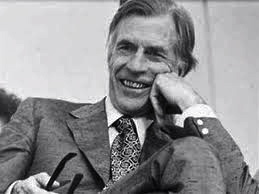
John Kenneth Galbraith

Over a half-century ago, the respected economist John Kenneth Galbraith made the case for guaranteeing to all at least the minimum income needed to live. He acknowledged that some would choose to live off the dole rather than work, but he believed that most would not want to accept a subsistence lifestyle and would strive for more. He made the argument not on moral grounds, but on the same kind of practical grounds that Levin and Rouse use to make the case for spending more to reduce dropouts: over the long term, society gets back more than it spends to help people have enough to eat, stay healthy and gain an education.

We all understand that if we neglect to maintain our homes or our cars, we will pay more to repair them in the long run. The same is true for our collective selves. Sooner or later we will bear the costs of neglect of our neighbors. There is no way to opt out of those costs. If we are wise, we will do the maintenance now that will keep the costs reasonable over the long term. If we are wise, we will pay a little more now so we can pay far less later.

The trouble is, now is now and later always seems like much later. It’s a normal human response. It’s the way every child thinks. For a five-year old, immediate gratification trumps deferred gains. We’re not children though, and we don’t need anyone to show us the way. Each of us has the power within us to plan for a better future.

Take a look at the candidates in the next election. Ask yourself who among them will look to those who can afford to pay taxes to do so. Ask yourself who among them will invest in our human capital by offering adequate nutrition, health care and education to even the least fortunate among us. These are the women and men who will usher in a new morning in America.

Monday, January 16, 2012

Thursday's Child

Here in Palo Alto we have a school program called Tinsley, under which about five hundred kids from East Palo Alto, which is a mile away and is predominantly Hispanic, are brought into Palo Alto schools, which are mostly white and Asian. This isn’t something our community did voluntarily; it was forced on us twenty-five years ago by a Brown v. Board type lawsuit. So, while many applaud the program, others resent it, believing it diverts resources from Palo Alto kids and doesn’t do the kids from East Palo Alto much good.
A Stanford graduate student studying that last point—how much the East Palo Alto students are benefited---recently reported significant gains in science and history and small gains in math and English. She also noted important up-ticks in student self-confidence. Tinsley kids “felt comfortable talking to anybody, of any social class. They felt they could operate in a broader social world even if that process is sometimes hard.”

When the Stanford study was reported by a local online news site, an intense community discussion followed. Passions, it seems, have not cooled.

“Busing,” as Tinsley type solutions used to be called, is a difficult and divisive issue. There are good arguments on both sides, but these facts remain:

1.     The nation’s schools have re-segregated to pre Brown v. Board levels.
2.     The education opportunity in schools with predominantly minority populations is generally inferior to those in white schools.
3.     Income inequality is growing. It is now much greater than during the Civil Rights movement, greater than any time since the 1920s.
4.     Income inequality makes upward mobility harder.

Palo Alto is not all rich folks, but we are very well off. Many here made their places by their own hard work and enterprise. That personal success, and the struggle for it, can make us think that if we can do it anyone should be able to. Economists tell us this is not true. Being born poor is a substantial impediment to upward mobility.

Maybe that’s just the way it is. Maybe those of us who are lucky (or have made our own luck) owe nothing to those who are not. I don’t think that is the way we feel toward one another, however. Times are a little tougher now, so perhaps we are a bit hunkered down, looking primarily after ourselves, and that is understandable. Our future, though, as a country, depends upon our children. Not just the ones born to us, or adopted by us, but those all around us. We cannot prosper if we do not educate them and give them real (not imagined) opportunity to become important parts of the economic fabric of our society.

Even if you doubt Tinsley works as well as the Stanford researcher reports, it’s hard to see how, in a community as rich as ours, with the resources to make significant private contributions to our public schools, our children are suffering because of support for the Tinsley program.

And then there are these questions: If not here, where? If not us, who? I don’t see how we can just turn away from the reality that poor kids need help.

Martin Luther King dreamed of a day when his children “will not be judged by the color of their skin but by the content of their character.” It is a fair thing to wish for, and a test we should all hope to pass.

Wednesday, January 4, 2012

On the Warm Updraft

Salmon struggle upstream to spawn and die. The male praying mantis loses his head for sex. Little grey spiders, like Charlotte from Charlotte’s Web, spin their egg sacs, their magnum opuses, as Charlotte called them, with their last strength. Throughout nature, giving life to the next generation is, it seems, worth dying for.
I can’t decide whether I am Charlotte or Wilbur. Wilbur, I think, in those moments when he watched frantically as Charlotte’s children blew away on gossamer balloons in the warm spring breeze. Not quite Wilbur with his new friends, Charlotte’s daughters who stayed in the barn, who greeted him with “salutations,” just as their mother had. That’s the wonderful thing about children’s stories. At the end, the story begins anew.

For millennia humans lived no longer than the time it took to have children and raise them to an age at which they could survive on their own. Lately, we have been living longer, long past the time our kids go off on their own. Long past the time that, evolutionarily speaking, we are necessary.

I don’t know whether I’m thinking too much or feeling too much. Writers are in the business of reflection. It’s entertaining, but troubling too. The more I think about how the world works, how we live together, the harder it gets to understand. Or, maybe that’s not right. I think I understand it well enough, but I am discouraged by what seems to be our inability to live beyond our most basic instincts. On bad days, I think we are little more than big ant colonies, busy about the business of survival, some luckier than others, depending on one another in the same thoughtless way plants depend on sun and water.

So, that’s depressing, right? I mean we did have the Renaissance. I don’t think ants have had that yet. For all our high-mindedness, though, we are selfish. Except when it comes to our children. Like so many others in the animal kingdom, for our children we would without hesitation give up our lives.

So powerful is the protective instinct of a parent that it is nearly impossible to turn off. The problem is that after our children are out of the nest, the best way to help them is to back off. So here I am, watching the world turn, a world I have realized I cannot change, and watching my children from afar too, loving them from afar, if from such a distance what I feel can be called love, since for me love lives in the things I do for those I care for.

The years after your children are grown are unnatural years, years without a mortal purpose. Loving someone so much you would die for them is a little like actually dying. Everything else seems trivial. I imagine that’s the way soldiers returning from combat feel. In harm’s way they would have died for their buddies, but now they wander a tranquil landscape that is as deadly to their souls as the war zone was to their bodies.

You can’t always help how you feel. The rush of lust and sex. The spike of fear for a child in danger, the excruciating relief when the danger passes. The numbness of isolation. E.B. White gave us a happy ending, but then Charlotte didn’t have to sit home alone wondering whether her children had blown into a pond. I suppose he meant to give us more too: an illumination of the dreadful beauty of passages; a tender touch to brush aside the tears of loneliness; a warm updraft with a promise of new beginnings.